Cable Assembly-Strain Relieving

Anyone who has used an electronic device has come in contact with a strain relieved wire or cable.  Some strain reliefs are visible and some aren’t, but all of them are vital to the life of an assembly using wire or cable.  This article will explain the reasons why strain reliefs are needed and the basic types and methods used.

Why use a strain relief?  All of us have unplugged something from an AC wall socket – a vacuum cleaner, lamp, extension cord or power saw.  There are really only two ways to do this, one, grab the plug and pull it out of the socket, or two, grab the wire or cable some distance away from the plug and yank.  Now we all now which is the proper way to unplug the cable; but we have used the wrong way too.  The latter method puts all the extraction force onto the contacts inside the plug.  If the wires weren’t connected to the plug strongly enough the cable wouldn’t last long.  This is an extreme example of why strain relieving is necessary, but it illustrates the fact that anytime a connector is on the end of a wire or cable there is the potential for force to be transferred from the wire or cable onto the connector.  Strain relieving is how engineers design cable assemblies, coiled cords and wire harnesses to withstand these forces.

Another purpose for stain reliefs is to help a cable assembly or coil cords withstand flexural forces.  This can be best illustrated using the metal coat hanger as an example.  Most of use have taken a metal coat hanger and wanted to make it shorter.  Usually we don’t grab a pair of scissors or wire cutters for this task.  Usually we find the spot on the coat hanger we want the “cut” to be and start bending the hanger back and forth, and eventually the coat hanger breaks.  This same effect can occur in wire and cable, and just like with the coat hanger once broken it cannot be used for its original purpose.  Here strain relieving is used by engineers to design a cable assembly or coiled cable to withstand bending the product might see during use.

To prevent failure from pull forces designers must “anchor” the wire or cable to the connector.  This is accomplished mechanically along with the electrical connection needed to transfer the signal or power the connector must carry.  This mechanical connection can be accomplished in many ways.  For many contacts a hole is placed in the metal through with the wire is passed and in essence tied onto the contact.  In other contacts the stranding is crimped by metal tight enough to become one with the wire.  These methods are only as strong as the wire itself and will only withstand a breaking force equal to the strength of the wire.

Cables and coil cords often have multiple conductors and the break strength of these is much stronger than that of any of the individual conductors within.  For these assemblies it is often desirable to anchor the whole cable and not just the individual conductors.  One way to accomplish this is to place something around the cable or wires that grabs onto the bundle.  This could be a metal band, a plastic tie wrap or even a knot.  Once the feature is on the cable it is placed against a feature on the connector, a metal housing, a plastic housing or over mold that transfer the force from wire of cable to the body of the connector.  This makes sure the force is not exerted onto the connector’s contacts which are often not able to withstand any great force.

To prevent failure from bending forces it is necessary to change how the cable or wire bends, not how much it bends.  Many coiled cords and cable assemblies are used in dynamic environments, and therefore must bend a lot.  The key here is to design a product that can withstand the bending.  Going back to our coat hanger example we know that the sharper the bend radius the quicker the coat hanger will break.  The same is true for any assembly made with wire or cable.  Here the designer’s goal is to increase the bend radius.  This can be done with an over molded strain relief that forces the cable or wire to bend in a large radius using a tapered shape with slots.  Another method is to design the product such that it contains a built in radius in the metal or plastic that allows the wire or cable to bend in a large radius.  Many times a simple section of heat shrink or a series of heat shrinks can accomplish the same result.

As is quite evident strain relieving is a critical component in most custom cables and wire harnesses.  In further articles we will discuss specific design situations, the solutions used and the testing results seen.  However sometimes it is necessary to rely on expert advice.  If you need help designing strain reliefs for your cable assembly or coiled cord Meridian Cable has over 30 years experience and often has existing solutions that can be used.

Many people are gullible enough to believe that EVERYTHING imported is of poor quality.  This simple defies logic and anyone who makes a blanket statement as such surely doesn’t know the world we live in today.  Meridian Cable makes coil cords in China, designs them in America and is creating jobs in BOTH countries.  This cannot be said by some of our competitors.

First let’s address the quality issue.  If you have bought a cell phone, laptop computer, television or many other electronic devices odds are it was imported.  The same is true for many, many other items.  Kitchen appliances, furniture, medical devices, industrial controls and caskets are just a few of the items imported into America from overseas.  If the argument is true that everything imported is of poor quality how is it that there are excellently made examples of every item listed here?  The same is true of coil cords and cable assemblies.  The truth is you can find poor quality manufacturing ANYWHERE, and that includes America.  The important thing is to find a reputable company with a long history of quality performance.

Second let’s discuss why anyone would make such a blanket statement.  There are great manufacturing companies all over the world, and there are very poor manufacturing companies all over the world.  In this day and age surely everyone knows that excellent performance is not limited to any nation.  Anyone who thinks one country has all the advantages is limiting their option.  Granted there are reasons to buy from a given country and those do count.  However if quality is the only criteria then there are many countries that qualify.  The same is true of coil cords and cable assemblies.  The truth is you can find companies at each end of the quality spectrum in most countries.  A smart assessment would include ALL companies that can perform and not limit the options based on geography.

Third it is helpful to remember how small the world is today.  Sure the earth has not changed size in our lifetime, or for a few billion years for that matter, but from a business standpoint the world has never been smaller.  It took Christopher Columbus 5 weeks to cross the Atlantic in 1492, the first steamship took 18 days, Lindbergh 33.5 hours and today a modern jet makes the journey in 7 to 8 hours.  Technology has continuously made the world smaller with each passing generation.  Anyone who denies this fact is either purposely not telling the truth or is clinging to a lost world.

Last we all need to remember our business history.  There are countless examples of countries and companies who close themselves off to the options the world can afford.  China for example in 1100’s had paper, gunpowder and the compass CENTURIES before Europe.  And in the 1400s, 80 years before Columbus’ voyage they had 400 foot long, ocean going boats while Columbus’ boats were about 70 feet long.  China closed their borders, burned their boats, and was not a serious economic power for the next 500 years.

The point is obvious; any company that wants to grow and be competitive has to take advantage of every opportunity and resource available.  Anyone who says ALL the advantages are in ONE country is either not being honest, or is myopic and denying reality.  In today’s business environment, with the advancing in communication and logistics, any company can buy from any other company.  All it takes is find thing right partner.  When it comes to coil cords and cable assemblies Meridian Cable, being a global company, can be the best partner an OEM can find.  And we have added many jobs in AMERICA over the last few years, so if you are worried about American job creation Meridian Cable is doing that too!

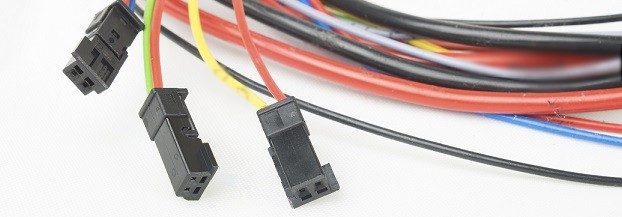
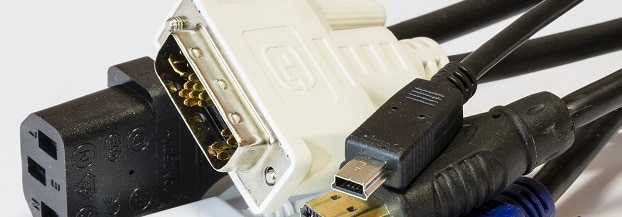
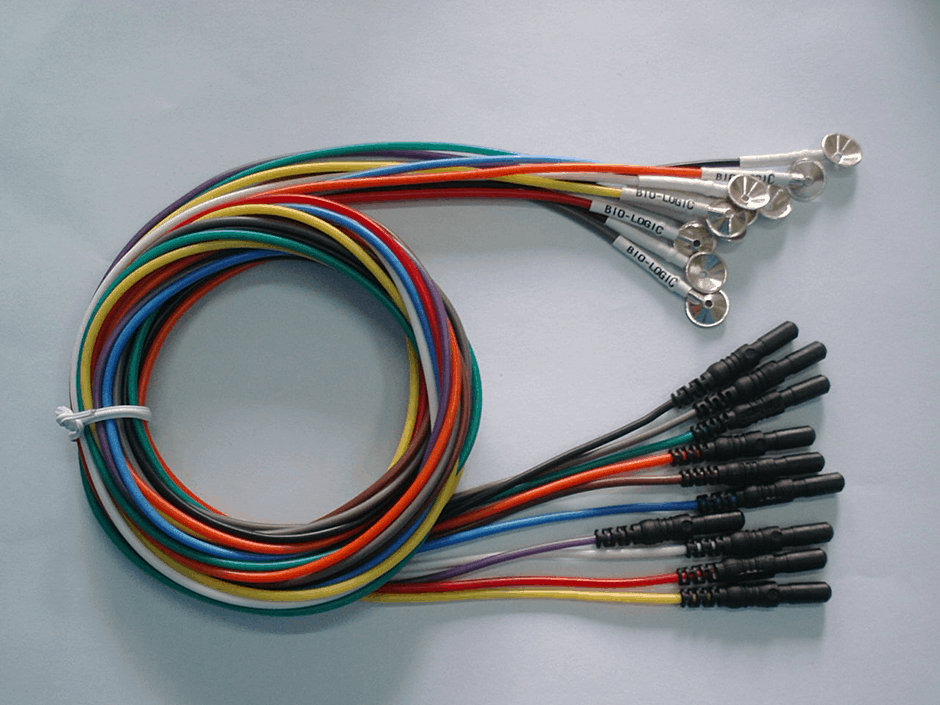
Many electronic devices, from toys to CD players, to computers, to jumbo jets need specialized cable assemblies to connect the various printed circuit boards, control panels and other electro-mechanical parts. Unlike cables for connecting a computer to its various peripherals, you can’t just go to your corner electronics store to pick them up. These are always customized assemblies, manufactured to meet the customer’s specific needs.

The term “cable assembly” can refer to anything from a two inch long wire with connectors at each end, to complex wiring harnesses that are hundreds of feet long, with many types of individual cables and termination points every few inches. The exact design of any cable assembly depends upon the product it will be used in.

The process of manufacturing these cable assemblies or wiring harnesses starts with the design of the product. Unlike other manufactured parts, the final drawings for cable assemblies aren’t produced before the prototype, but from the prototype. A schematic diagram is developed for the product, connectors are chosen, and the general routing of the cable is determined. Technicians build the prototype wiring harness in the prototype, which is then taken out for detailed drawings to be completed.

Cable assembly manufacturers work from these drawings and a wiring chart to build the necessary fixturing for the cable assemblies to be easily and accurately manufactured. Like any other part, accuracy is essential; however, unlike other parts, the flexibility of the wires in a cable assembly makes it difficult to maintain exacting tolerances.

In preparation for the actually assembly, the various wires, often of several different types, are individually cut and terminated with the right connectors or connector pins. In some cases, wire numbers, or other markings are placed upon the wires, to ease any necessary troubleshooting of the finished product. Automated tooling is used as much as possible for wire cutting, attaching terminals and connectors, and bundling the finished assembly.

In most cases, specialized cable assemblies are manufactured by hand. This means that the actual work of laying the individual wires in the proper place and inserting pins into the connector housings is done by an army of production workers. This is painstaking work, requiring a lot of attention to detail. One wire in the wrong place can render an expensive product inoperable.

Cable assemblies are held together in a variety of ways, depending upon the specific needs of the product manufacturer. Some are wrapped with electrical tape, others bound together with cable clamps and still others are tied together with a string that looks very much like waxed dental floss. In cases where the cable assembly is likely to encounter a lot of friction, a plastic “loom” is placed over the assembly to protect the cables.

Cables for Ultra-Slow Motion Cameras

Hi,

I’m sure that many of you will be watching the Super Bowl this weekend. While you are watching the game and are enjoying the great replays, think of Meridian Cable. Meridian Cable supplies the cables for the cameras that provide the high-definition, ultra-slow motion replays for CBS Sports’ live broadcast and NFL Films’ coverage of Super Bowl XLIV.

Contact Us Now for a Free Consult

Meridian Cable Video

Electrical Cable Assembly Curly Cords Coiled Cable Conductor Coil Cords Overmolding Connectors Coiled Electrical Cables