Electronic Cable Assemblies – Building For High Flex Environments


Electronic Cable Assemblies

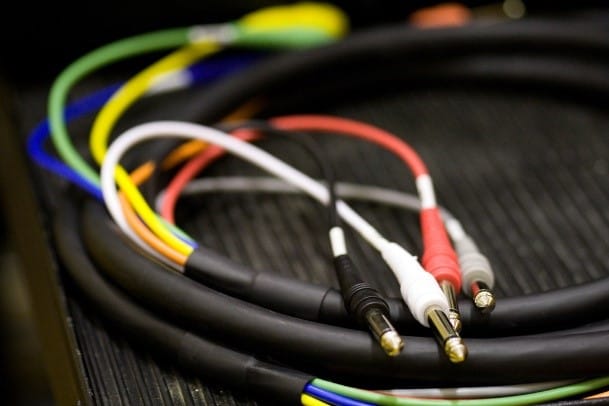
Electronic Cable Assemblies are used on a wide variety of equipment they often experience wide ranges of movement, or flexing.


Electronic cable assemblies are found on medical products, military equipment, industrial controls and machinery, and all kinds of consumer electronics.  Electronic cables can be defined as cables that transmit control signals or information, or that supply low current power typically below 5 amps.  Often the power is DC by sometimes it can be AC, but in either case for electronic cable assemblies the power is low.

Electronic cable assemblies are used on a wide variety of equipment they often experience wide ranges of movement, or flexing.  Regardless of how much movement the assembly experiences it is critical that it be designed correctly to withstand any flexing.  This is important for two reasons.  One, a failed cable assembly means the data or power stops and this can have bad consequences.  Two, a wrong design can increase costs beyond what the application truly needs.

Some applications require a lot of flexural capability. Examples are medical cables, military cables or industrial control cables where failure is not an option or the equipment runs quickly for long periods of time.  Other applications don’t flex much at all.  Examples are vending machine cables, security cables or box build wire harnesses that are installed one time and never move again.

Flexural requirements for wire assemblies can range from 1, in the case of wire harnesses, to hundreds of thousand for industrial cables.  Some products need hi-flex cables to ensure they never fail, which is the case for medical cable assemblies and military cable assemblies.

How many flexes a cable can withstand is a direct function of the materials used in construction and the process employed to make the product.

In regards to electronic cable assemblies, there are really only 3 types of materials in any cable or wire, metal, plastic and fillers.

  • Typically the metal used is copper in some fashion.  The copper can be bare, plated with another metal such as tin, or in some cases clad around another metal such as silver.
  • The plastic can be any combination of polyvinyl chloride, PVC, polyethylene, PE, polyurethane, PU, or thermoplastic elastomer, TPE.
  • Fillers are used to ensure the cable’s cross section is uniform in shape, whether round, oval or square a uniform cross section is critical.

At the heart of all cables and wires is metal, typically copper.  Metal as we all know comes in many varieties and copper, for most applications, has the best attributes to make a cable or wire.  As we also know most metals don’t like bending.  This is especially true of larger pieces, which is why most electronic cable assemblies use stranded wires.  This means to make a certain gauge conductor many smaller strands of copper are used.  The amount of copper doesn’t change it is just spread across many conductors.  As we all know small things bend easier than large things so a wire or cable made with a high strand count will have a long flex life than a wire or cable made with one conductor.

Around the conductors is most often plastic of some kind.  We all experience and use plastic every day and the variety is quite amazing.  From the rigid bodies of cell phones, to the semi flexible sides of a milk or water container, to soft pliability of a rubber band plastics used in custom cable assemblies come in even more varieties than copper.  Some custom wire assemblies can accept very rigid constructions, but for custom electronic cable assemblies usually a high degree of flexing is required.  For these applications it is best to use plastics capable of handling repeated bending.  These can range from PVC all the way to PTFE.

Obviously with all these factors designing a custom electronic cable can range from simple to very complex, so finding a qualified cable and wire vendor is critical for many companies.  Meridian Cable recently designed, manufactured and cycled a cable assembly to over 200,000 cycles without any failures.  If you need custom electronic cable assemblies,Meridian Cable can design and manufacture just what you need.  Contact us today for any custom cables needs.

CABLE ASSEMBLIES AND WIRE HARNESSES, the words are used all the time and often interchangeably.  One person’s cable assembly is another person’s wire harness.  Is there a difference, and if so does it really matter?  This article will show how to tell the difference, and give pros and cons for each.

Why would it matter what a bunch of wires is called?  Let’s use an example we can all relate to – food.  Most likely all of us have seen something on a menu at a restaurant and didn’t know what is was, and usually we ask someone at the table with us or the waiter.  But what if we didn’t and ordered noodles expecting pasta?  They look the same, but don’t really taste the same.  Or say we order tuna, expecting sushi, but we are served tuna salad instead.  Both are fish, but are decidedly different.  The same is true with cable assemblies and wire harnesses; while they both have wire they are decidedly different.

A cable, which is used to make a cable assembly, is a grouping of wires that are covered by an extruded sheathing.  Typical this sheathing is a thermoplastic such as polyvinylchloride, thermoplastic rubber or polyurethane.  In some special instances a thermoset material such as chlorinated polyethylene, chlorosulfonated polyethylene or EPDM hydrocarbon rubber.  Whether thermoplastic or thermoset material is used the key is the individual conductors are covered by a compound extruded around them.  This layer is in addition to the insulation on the individual wires providing additional protection from heat, moisture, abrasion, compression and other hazards the cable assembly might experience.

A wire, or conductor, which is used to make a wire harness, is an individual strand or group of strands covered by an extruded sheathing.  Again, this sheathing can be thermoplastic or thermoset, however in the case it is just a single layer.  When wire harnesses are made a group of individual wires are assembled together and typical “bound” in place with a mechanical device such as a cable tie, heat shrink, tubing or woven braiding.  Since the wires have only the one layer of sheathing the amount of protection from the environment is much less.

So what are the pros and cons of a cable assembly?  Some pros include, as mentioned above, increased protection from the environment due to the extra layer of plastic.  Also, having all the conductors in one bundle makes a neater and more convenient package which can be quite useful if the cable must be routed through or around equipment or components.  Having a cable also can allow the connectors on the end to be over molded, thus sealing the entire cable from the environment.  Two cons are an increase in size and weight, and typically the cost is higher due to the extra material and labor.

And the pros and cons of a wire harness?  These are usually the opposite of cable assemblies.  Pros include smaller size and weight, and lower cost since the extra material and labor is not used.  The cons are an increase in environmental vulnerability since the individual wires are exposed and the possibility of the wires “catching” on items during installation.

Since the differences are quite apparent what are some typical places each are used?  Cable assemblies are found in many exposed uses such as medical devices, industrial controls, military electronics and security products.  Wire harnesses are most often found inside products such as computers, vehicles, control cabinets and electronic assemblies.  So much like ordering food, when designing or buying a cable assembly or wire harness it is critical to know what you want.

Dear Colleagues,

I wanted to share a nice article about Meridian Cable’s customer Cross Match and their product, SEEK. The article discusses how the U.S. military probably used DNA and the SEEK to verify bin Laden’s identity.  Congratulations to Cross Match, it is nice when one of our customers ends up in the headlines as a result of assisting in such a huge capture.


CSI bin Laden: Commandos Use Thumb, Eye Scans to Track Terrorists


http://www.wired.com/dangerroom/2011/05/csi-bin-laden-commandos-use-thumb-eye-scans-to-track-terrorists/

Here is an excerpt:

But according to a senior Defense Department official, chances are they used the tool pictured above to verify his biometric information. The device is called a Secure Electronic Enrollment Kit, or SEEK, a handheld biometrics recorder that takes iris scans, fingerprints and facial scans and ports them back to an FBI database in West Virginia in seconds.

“We’ve always said this is about more than finding people in a crowd,” said the senior defense official, who requested anonymity to talk about the CSI-like gear that Special Operations Forces carry. The latest version, developed by a company called Crossmatch, is known as SEEK II, and it came out last year. It weighs less than 4 pounds, and its ability to send information back to the FBI database is “wham-bam,” even from low-connectivity areas.

Meridian Cable is proud that a custom cable assembly we designed and built could be a part of something this monumental.  We would also like to thank all the troops, military and government personnel who took part in this action, and are eternally grateful for their dedication and hard work on behalf our country.

Best regards,

Bud Kinzalow

President

Meridian Cable

If you are not familiar with the industry, coil cords and cable assemblies are items easily looked over and taken for granted.  You might not realize just how prevalent they are and how much of a part of daily life they encompass. If you stop to take a look around you, coil cords and cable assemblies are everywhere.  Due to their unique applications and locations, the standard coil cord and cable assembly are no longer “enough”. There is a growing need for “custom” coil cords and cable assemblies to accommodate the ever changing world and environment we live and participate in on a daily basis.

What are some of these unique applications and locations that a custom cable manufacturer may be able to provide solutions to a customer? They can include, but are not limited to: medical devices and operational equipment, surveying equipment (for which UV inhibitors and special materials can be used to make the coil cords and cable assemblies weather and animal proof), security devices, and operational assistants in daily activities.

Where can one see these coil cords and cable assemblies in action and being used in practical day to day applications? A few of these can be found at big box retailers, in hospitals, on construction sites just to name a few. If one were to look close enough, they would find coil cords and cable assemblies to be everywhere.

When is a custom manufacturer the one for you? A custom manufacturer can offer a more personalized approach to answering your specific application and need. Not all coil cord and cable assembly needs are the same nor are they a standard size. A custom manufacturer can evaluate your need, environment and individual solution and, with their team of engineers, can create a product that will offer you a customized solution to answer your specific need.

While this is just a generalized overview to explain the benefits of seeking out a custom coil cord manufacturer, please feel free to contact one of the experienced team members at Meridian Cable to answer your custom coil cord and cable assembly questions.

Emily Mierzejewski

Customer Manager

 Meridian Cable

Anyone who has used an electronic device has come in contact with a strain relieved wire or cable.  Some strain reliefs are visible and some aren’t, but all of them are vital to the life of an assembly using wire or cable.  This article will explain the reasons why strain reliefs are needed and the basic types and methods used.

Why use a strain relief?  All of us have unplugged something from an AC wall socket – a vacuum cleaner, lamp, extension cord or power saw.  There are really only two ways to do this, one, grab the plug and pull it out of the socket, or two, grab the wire or cable some distance away from the plug and yank.  Now we all now which is the proper way to unplug the cable; but we have used the wrong way too.  The latter method puts all the extraction force onto the contacts inside the plug.  If the wires weren’t connected to the plug strongly enough the cable wouldn’t last long.  This is an extreme example of why strain relieving is necessary, but it illustrates the fact that anytime a connector is on the end of a wire or cable there is the potential for force to be transferred from the wire or cable onto the connector.  Strain relieving is how engineers design cable assemblies, coiled cords and wire harnesses to withstand these forces.

Another purpose for stain reliefs is to help a cable assembly or coil cords withstand flexural forces.  This can be best illustrated using the metal coat hanger as an example.  Most of use have taken a metal coat hanger and wanted to make it shorter.  Usually we don’t grab a pair of scissors or wire cutters for this task.  Usually we find the spot on the coat hanger we want the “cut” to be and start bending the hanger back and forth, and eventually the coat hanger breaks.  This same effect can occur in wire and cable, and just like with the coat hanger once broken it cannot be used for its original purpose.  Here strain relieving is used by engineers to design a cable assembly or coiled cable to withstand bending the product might see during use.

To prevent failure from pull forces designers must “anchor” the wire or cable to the connector.  This is accomplished mechanically along with the electrical connection needed to transfer the signal or power the connector must carry.  This mechanical connection can be accomplished in many ways.  For many contacts a hole is placed in the metal through with the wire is passed and in essence tied onto the contact.  In other contacts the stranding is crimped by metal tight enough to become one with the wire.  These methods are only as strong as the wire itself and will only withstand a breaking force equal to the strength of the wire.

Cables and coil cords often have multiple conductors and the break strength of these is much stronger than that of any of the individual conductors within.  For these assemblies it is often desirable to anchor the whole cable and not just the individual conductors.  One way to accomplish this is to place something around the cable or wires that grabs onto the bundle.  This could be a metal band, a plastic tie wrap or even a knot.  Once the feature is on the cable it is placed against a feature on the connector, a metal housing, a plastic housing or over mold that transfer the force from wire of cable to the body of the connector.  This makes sure the force is not exerted onto the connector’s contacts which are often not able to withstand any great force.

To prevent failure from bending forces it is necessary to change how the cable or wire bends, not how much it bends.  Many coiled cords and cable assemblies are used in dynamic environments, and therefore must bend a lot.  The key here is to design a product that can withstand the bending.  Going back to our coat hanger example we know that the sharper the bend radius the quicker the coat hanger will break.  The same is true for any assembly made with wire or cable.  Here the designer’s goal is to increase the bend radius.  This can be done with an over molded strain relief that forces the cable or wire to bend in a large radius using a tapered shape with slots.  Another method is to design the product such that it contains a built in radius in the metal or plastic that allows the wire or cable to bend in a large radius.  Many times a simple section of heat shrink or a series of heat shrinks can accomplish the same result.

As is quite evident strain relieving is a critical component in most custom cables and wire harnesses.  In further articles we will discuss specific design situations, the solutions used and the testing results seen.  However sometimes it is necessary to rely on expert advice.  If you need help designing strain reliefs for your cable assembly or coiled cord Meridian Cable has over 30 years experience and often has existing solutions that can be used.

Many people are gullible enough to believe that EVERYTHING imported is of poor quality.  This simple defies logic and anyone who makes a blanket statement as such surely doesn’t know the world we live in today.  Meridian Cable makes coil cords in China, designs them in America and is creating jobs in BOTH countries.  This cannot be said by some of our competitors.

First let’s address the quality issue.  If you have bought a cell phone, laptop computer, television or many other electronic devices odds are it was imported.  The same is true for many, many other items.  Kitchen appliances, furniture, medical devices, industrial controls and caskets are just a few of the items imported into America from overseas.  If the argument is true that everything imported is of poor quality how is it that there are excellently made examples of every item listed here?  The same is true of coil cords and cable assemblies.  The truth is you can find poor quality manufacturing ANYWHERE, and that includes America.  The important thing is to find a reputable company with a long history of quality performance.

Second let’s discuss why anyone would make such a blanket statement.  There are great manufacturing companies all over the world, and there are very poor manufacturing companies all over the world.  In this day and age surely everyone knows that excellent performance is not limited to any nation.  Anyone who thinks one country has all the advantages is limiting their option.  Granted there are reasons to buy from a given country and those do count.  However if quality is the only criteria then there are many countries that qualify.  The same is true of coil cords and cable assemblies.  The truth is you can find companies at each end of the quality spectrum in most countries.  A smart assessment would include ALL companies that can perform and not limit the options based on geography.

Third it is helpful to remember how small the world is today.  Sure the earth has not changed size in our lifetime, or for a few billion years for that matter, but from a business standpoint the world has never been smaller.  It took Christopher Columbus 5 weeks to cross the Atlantic in 1492, the first steamship took 18 days, Lindbergh 33.5 hours and today a modern jet makes the journey in 7 to 8 hours.  Technology has continuously made the world smaller with each passing generation.  Anyone who denies this fact is either purposely not telling the truth or is clinging to a lost world.

Last we all need to remember our business history.  There are countless examples of countries and companies who close themselves off to the options the world can afford.  China for example in 1100’s had paper, gunpowder and the compass CENTURIES before Europe.  And in the 1400s, 80 years before Columbus’ voyage they had 400 foot long, ocean going boats while Columbus’ boats were about 70 feet long.  China closed their borders, burned their boats, and was not a serious economic power for the next 500 years.

The point is obvious; any company that wants to grow and be competitive has to take advantage of every opportunity and resource available.  Anyone who says ALL the advantages are in ONE country is either not being honest, or is myopic and denying reality.  In today’s business environment, with the advancing in communication and logistics, any company can buy from any other company.  All it takes is find thing right partner.  When it comes to coil cords and cable assemblies Meridian Cable, being a global company, can be the best partner an OEM can find.  And we have added many jobs in AMERICA over the last few years, so if you are worried about American job creation Meridian Cable is doing that too!

Many electronic devices, from toys to CD players, to computers, to jumbo jets need specialized cable assemblies to connect the various printed circuit boards, control panels and other electro-mechanical parts. Unlike cables for connecting a computer to its various peripherals, you can’t just go to your corner electronics store to pick them up. These are always customized assemblies, manufactured to meet the customer’s specific needs.

The term “cable assembly” can refer to anything from a two inch long wire with connectors at each end, to complex wiring harnesses that are hundreds of feet long, with many types of individual cables and termination points every few inches. The exact design of any cable assembly depends upon the product it will be used in.

The process of manufacturing these cable assemblies or wiring harnesses starts with the design of the product. Unlike other manufactured parts, the final drawings for cable assemblies aren’t produced before the prototype, but from the prototype. A schematic diagram is developed for the product, connectors are chosen, and the general routing of the cable is determined. Technicians build the prototype wiring harness in the prototype, which is then taken out for detailed drawings to be completed.

Cable assembly manufacturers work from these drawings and a wiring chart to build the necessary fixturing for the cable assemblies to be easily and accurately manufactured. Like any other part, accuracy is essential; however, unlike other parts, the flexibility of the wires in a cable assembly makes it difficult to maintain exacting tolerances.

In preparation for the actually assembly, the various wires, often of several different types, are individually cut and terminated with the right connectors or connector pins. In some cases, wire numbers, or other markings are placed upon the wires, to ease any necessary troubleshooting of the finished product. Automated tooling is used as much as possible for wire cutting, attaching terminals and connectors, and bundling the finished assembly.

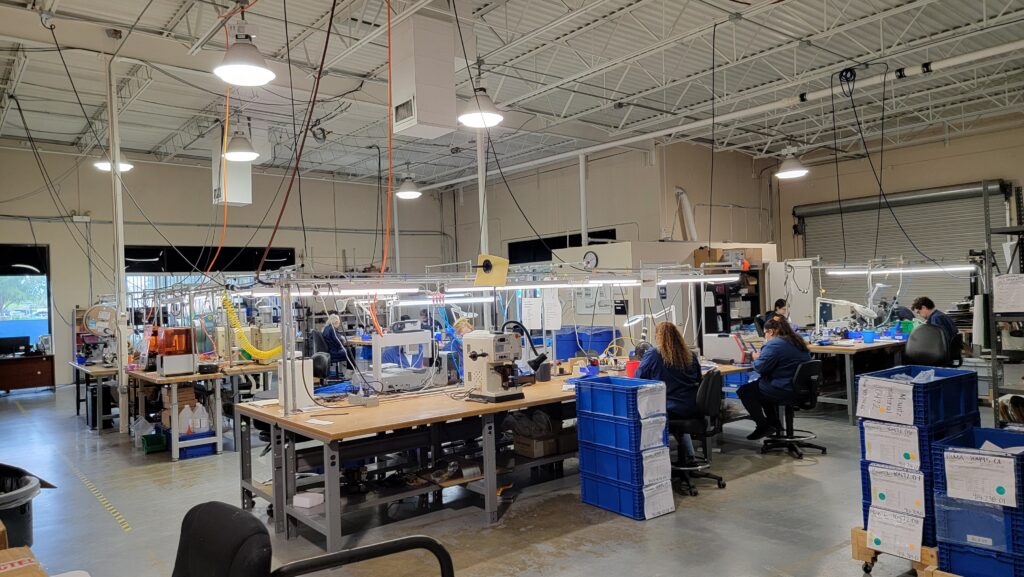
In most cases, specialized cable assemblies are manufactured by hand. This means that the actual work of laying the individual wires in the proper place and inserting pins into the connector housings is done by an army of production workers. This is painstaking work, requiring a lot of attention to detail. One wire in the wrong place can render an expensive product inoperable.

Cable assemblies are held together in a variety of ways, depending upon the specific needs of the product manufacturer. Some are wrapped with electrical tape, others bound together with cable clamps and still others are tied together with a string that looks very much like waxed dental floss. In cases where the cable assembly is likely to encounter a lot of friction, a plastic “loom” is placed over the assembly to protect the cables.

Slow motion video has changed and the cable assemblies used to transmit the data have too. Meridian Cable was approached by a manufacturer of the camera used in this video: Video: Power Game .The customer contacted us about a custom coaxial cable assembly and we now supply them with coaxial cable assemblies that perform every bit as well as the players in the video. The video shows a great example of slow motion video in the age of high definition cameras.

All of us have seen a coaxial cable.  It has a center conductor, some insulation around the center conductor, then shielding over the insulation and finally an outer layer of material called the jacket.  If you have ever set up “cable” to your TV you have most likely handled and RG59 or an RG6 coaxial cable.  These cables are wonderful for basic cable, but won’t work at all for this video.

Meridian Cable’s customer needed FIVE coaxial cables inside a cable about the size of the RG59 or RG6 mentioned above.  These coaxial cables needed to be RG174 or RG316 equivalent and be completely insulated from the other coaxial cables in the bundle.  And to start they didn’t want to have to buy 25,000 feet. 

We were able to design this cable and run a sample quantity of only 1,000 feet.  This is truly what a custom cable assembly vendor like Meridian Cable should do.

As you watch the video remember that these are high performing athletes, and their power and grace makes what they do look easy.  Manufacturing a custom coaxial cable assembly is no different.  Meridian Cable makes designing and building custom cable assemblies look easy, and we do that every day for clients like you.

When you need a custom cable assembly or coil cord Meridian Cable can make your search easy.

Bud Kinzalow

Meridian Cable

Custom, that word is used so often today it is often hard to know what it truly means.  This as true for a custom cable assembly as it is for any other product. Exactly what is a custom cable assembly? Hopefully the following information will help you know if the cable assembly you need is custom or not.

If you were driving down the street and saw a vehicle that had the front end of a sports car, the middle section of a family sedan and the rear end of a pick up truck you would know instantly it was custom.  However if a standard compact was next to you, well you would know that car was definitely not custom.

So how do you tell a custom cable assembly from a standard cable assembly?  Really there are three things that will tell you and they can be summed up as follows; the ends, the middle and the inside.

Let’s start with the ends.  Most often these are connectors, but they could be any kind of termination.  We have all seen cable assemblies at big box retailers and know most of the connectors used.  If you need a cable assembly with typical connectors, then odds are the cable assembly is not custom.  We recently had a customer that needed their cable terminated with a housing that had a switch and circuit board inside.  And on the circuit board, in addition to circuitry, there was an LED that needed to project through a light pipe.  This was decidedly custom and not available at their local store.

The middle of a cable assembly is sort of the sedan in between the sports car and pick up truck.  Let’s say you need a standard cable, but you need a different length.  Or better yet you need a place in the middle to have another cable come out, because you need to connect to something else.  This month we had a request for a USB cable.  Simple enough until the customer said they need to connect the ground of the cable assembly to an AC power outlet.  That is truly a custom cable assembly.

The inside of a cable assembly is the cable itself.  We can all go onto to the internet and search for cables.  Try this, search for a cable assembly made with twelve 18 awg conductors, one shielded 18 awg conductor and 1 RG 316 coaxial cable, all with a polyurethane jacket.  Odds are you won’t find this, except on our website.  Or say you need a cable with three 20 awg conductors and five 26 awg conductors, in a flat, not round, shape.  These are truly custom cables and you will find these and more on our website.

To summarize,  if your cable assembly needs a special end, requires something special in the middle or must have something special inside then you need a custom cable assembly.  Meridian Cable has designed thousands of custom cable assemblies and all you need to do is call us.

Bud Kinzalow ­Meridian Cable

Cables for Ultra-Slow Motion Cameras

Hi,

I’m sure that many of you will be watching the Super Bowl this weekend. While you are watching the game and are enjoying the great replays, think of Meridian Cable. Meridian Cable supplies the cables for the cameras that provide the high-definition, ultra-slow motion replays for CBS Sports’ live broadcast and NFL Films’ coverage of Super Bowl XLIV.

Contact Us Now for a Free Consult

Meridian Cable Video

Electrical Cable Assembly Curly Cords Coiled Cable Conductor Coil Cords Overmolding Connectors Coiled Electrical Cables